Seeing the tire pressure light on your dashboard can be frustrating, especially if your vehicle seems to be driving normally. In many cases, the warning is tied to low air pressure in one or more tires, but it can also point to a sensor problem, temperature-related pressure changes, or a fault in the TPMS system itself.
If you are wondering why your tire pressure light is on, the best first step is not to ignore it. A quick check can help you figure out whether the issue is simple, urgent, or something that needs professional TPMS service and diagnostics.
What does TPMS light mean?
TPMS stands for Tire Pressure Monitoring System, and the light usually means one or more tires may be underinflated or the system has detected a sensor-related issue.
A tire pressure warning light is there to alert you when your tires may not be at a safe operating pressure. Proper tire pressure matters because it affects traction, braking, handling, fuel efficiency, and tire wear.
On many vehicles, a solid warning light usually points to pressure loss. A flashing tire pressure light often suggests the problem may be with the TPMS system or one of the sensors rather than the tire pressure alone.
Why is my tire pressure light on?
There are a few common reasons a low tire pressure light or TPMS warning light may appear.
The most common cause is simple air loss. Tires naturally lose pressure over time, and even a small drop can be enough to trigger the warning light. A puncture, a leaking valve stem, or a damaged wheel can also cause the same problem.
Temperature changes are another common reason. When the weather gets colder, tire pressure drops. That is why many drivers notice the light in the morning or during seasonal changes, even if there is no major leak.
In some cases, the issue is not the tire itself. If your TPMS sensor light is on, the system may be detecting a weak sensor battery, a faulty sensor, or a communication problem within the TPMS setup.
Many drivers also wonder why their TPMS light is on when the tires look fine. In that situation, the issue may be a failing sensor, a reset problem, or a system fault rather than low air pressure.
Recent tire service can also play a role. If tires were rotated, replaced, or serviced recently, the system may need to be reset or checked to make sure everything is reading correctly.
What should you check first?
First, inspect all four tires for visible damage and check the air pressure with a reliable tire gauge before assuming the problem is a bad sensor.
Start with a visual check. Look for a tire that seems lower than the others, a nail or screw in the tread, sidewall damage, or anything unusual around the valve stem.
Next, check each tire’s pressure against the vehicle’s recommended PSI, which is usually listed on the driver’s door sticker. Do not rely on the pressure number printed on the tire sidewall, because that is not the recommended operating pressure for your vehicle.
If one or more tires are low, inflate them to the correct level and monitor the light. In some vehicles, the warning will turn off after driving for a short distance. In others, the system may need a manual reset.
If all tires appear properly inflated but the TPMS warning light stays on, the problem may be sensor-related and worth inspecting more closely.
Tire service made easy.
No shop visits. No long waits. Just reliable mobile tire service brought directly to you.
Can I drive with tire pressure light on?
You may be able to drive a short distance carefully if the vehicle feels normal and the tire is not visibly low, but you should inspect it as soon as possible.
If the light comes on and your vehicle still feels stable, it may be safe to drive a short distance to a nearby service location. Still, you should reduce speed, avoid hard braking, and avoid long highway drives until the issue is checked.
If the vehicle pulls to one side, a tire looks visibly underinflated, or you hear unusual road noise, stop and inspect the tires right away. Driving too long on an underinflated tire can cause poor handling, extra heat buildup, and faster tire damage.
So, can I drive with the tire pressure light on? Sometimes yes, for a short and careful trip. But it should never be treated as a warning to ignore for days.
What if the tire pressure light is flashing?
A flashing tire pressure light often means the vehicle is having trouble reading the TPMS system correctly.
That can happen when a TPMS sensor battery is failing, a sensor is damaged, or the system has lost communication with one of the wheels. In that case, even if your tire pressure is okay, the monitoring system may not be working as it should.
If the light flashes and then stays on, it is a strong sign that the vehicle should be inspected soon. This is where TPMS service and diagnostics become especially important, because the issue may not be obvious from a visual tire check alone.
Why does my tire pressure light keep coming on and off?
If your tire pressure light keeps coming on and off, the cause is often changing temperatures, a slow air leak, or an intermittent TPMS sensor issue.
This happens a lot during cooler mornings and warmer afternoons. A small pressure drop can trigger the system when the tires are cold, then the warning disappears after the tires warm up during driving.
A slow leak can create the same pattern. The pressure may hover right around the warning threshold, causing the light to come and go.
Intermittent sensor problems can also cause inconsistent warnings. If you are asking why your tire pressure light keeps coming on and off, it is a good idea to check the actual tire pressures first and then move to sensor diagnostics if the readings seem normal.
When professional TPMS diagnostics may be needed
If you keep seeing the TPMS light after correcting the tire pressure, it is time for a closer look. The same applies if the light flashes, comes back repeatedly, or appears after tire service.
Professional diagnostics can help confirm whether the issue is low pressure, a faulty sensor, a relearn problem, or a broader TPMS system fault. That matters because the warning light is only useful if the system itself is working properly.
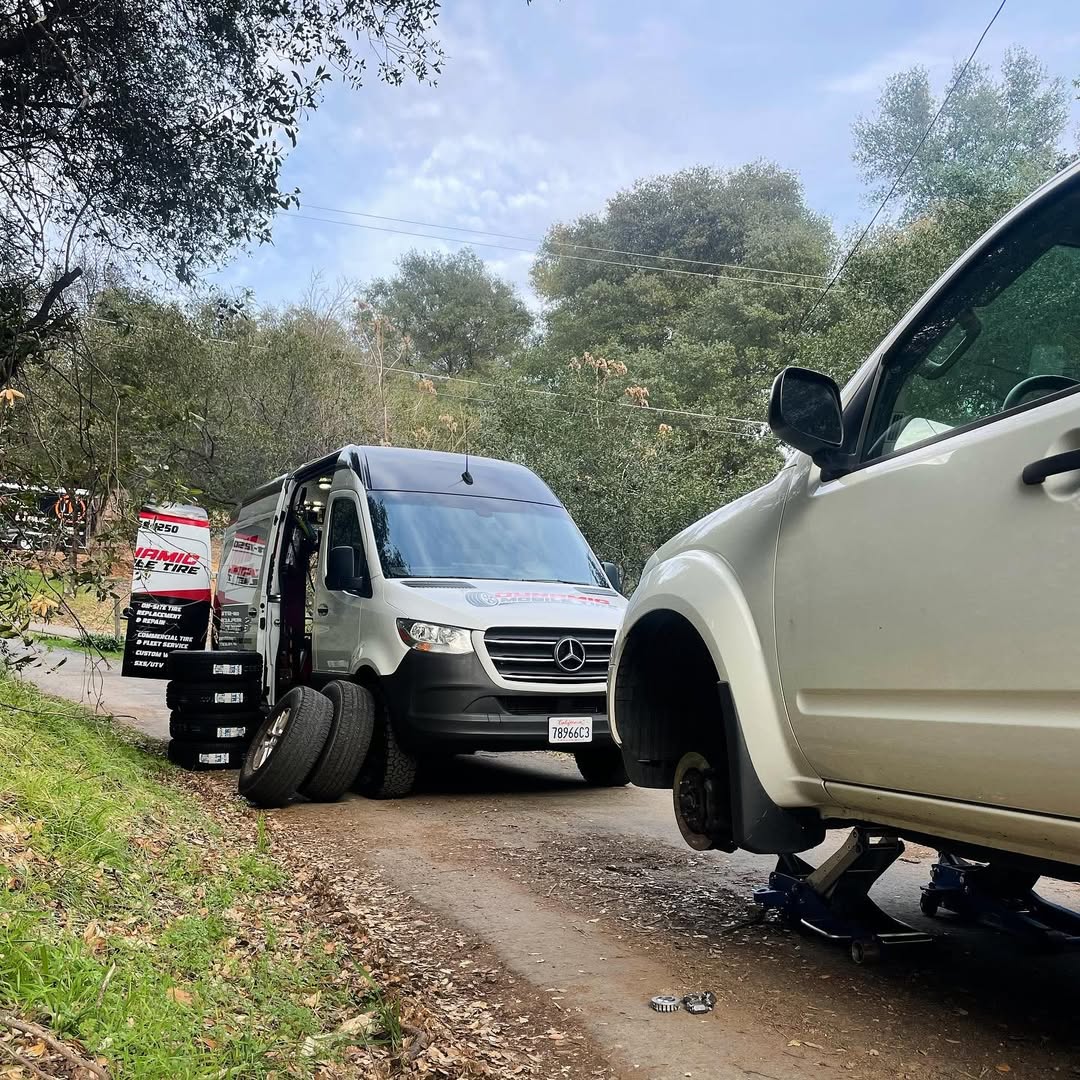
For drivers in the Sacramento area and surrounding Northern California service area, mobile tire support can make that process easier. If the warning does not clear or you are dealing with a recurring TPMS sensor light issue, our team can help inspect the problem and determine whether TPMS service is needed.
Skip the tire shop.We bring it to you.
Home, work, roadside, or job site. Dynamic Mobile Tire makes tire service easier, faster, and more convenient.
Book Mobile ServiceFinal thoughts
A tire pressure warning light does not always mean a major problem, but it does mean your vehicle needs attention. Sometimes the fix is as simple as adjusting tire pressure. Other times, the issue involves a sensor or the TPMS system itself.
The key is to check it early, drive carefully if needed, and avoid assuming the light will go away on its own. If the warning keeps returning or the light is flashing, a proper TPMS inspection can help you get a clear answer and avoid bigger tire issues later.