You may notice small cracks along the sidewall of a tire or between the tread blocks and wonder whether they are harmless signs of age or something more serious. The tire may still have plenty of tread, and the vehicle may seem to drive normally.
Tire dry rot is the deterioration of tire rubber over time, often appearing as cracks on the sidewalls or tread. While minor surface cracking and serious structural damage are not the same, deep or extensive cracking may mean a tire needs professional evaluation or replacement.
Understanding what tire dry rot looks like, why it develops, and which signs deserve more attention can help you make a more informed decision about your tires.
What Is Tire Dry Rot?
The term describes the gradual weathering of tire rubber, rather than ordinary tread wear or literal rotting.
“Dry rot” is commonly used for rubber that has changed as it ages and is exposed to environmental and operating conditions. The rubber is not rotting like wood.
A tire can still have usable-looking tread while showing signs of rubber aging elsewhere.
What Does Tire Dry Rot Look Like?
Tire dry rot commonly appears as fine cracks along the sidewalls, between tread blocks, or within tread grooves.
Common visual signs may include:
- Fine surface cracks on the sidewall
- Small networks of cracks in the rubber
- Cracks between tread blocks
- Cracking inside tread grooves
- Rubber that looks increasingly weathered
- More pronounced cracking as deterioration progresses
These signs can vary in severity. A few small surface cracks are not necessarily the same as deep or widespread cracking.
The location, depth, extent, and progression of the cracking all matter. Appearance alone cannot confirm whether the tire is structurally safe.
What Causes Tire Dry Rot?
Tire dry rot can develop as rubber ages and is exposed to sunlight, ozone, heat, storage conditions, and other environmental factors.
Several conditions may contribute over time:
- Natural tire aging
- Ultraviolet exposure from sunlight
- Ozone in the environment
- Heat exposure
- Weathering
- Long periods of storage
- Limited vehicle use
- Operating and maintenance conditions
These factors usually work together.
Tires can also deteriorate when a vehicle is driven very little. Low mileage does not automatically mean the rubber is still in good condition.
Are Small Cracks in Tires Dangerous?
Small surface cracks do not necessarily indicate the same level of damage as deep or widespread cracking, but visible deterioration should be evaluated when its severity is uncertain.
Minor surface checking can develop as tires age. That does not mean every small crack requires immediate replacement.
More concerning signs include deep cracks, extensive cracking across large areas, exposed internal reinforcement, bulges, visible separation, or several types of deterioration appearing at once.
Because internal damage cannot always be identified from the outside, a professional tire inspection is appropriate when cracking becomes noticeable, widespread, or difficult to judge.
Can You Drive on Dry-Rotted Tires?
Whether a tire showing dry rot is suitable for driving depends on the severity of the deterioration. Tires with suspected structural damage should not remain in normal service.
A tire with light surface checking is not necessarily in the same condition as one with deep cracks or deformation. However, visible cracking should not be ignored simply because the vehicle still drives normally.
Tires with exposed reinforcement, bulges, significant separation, or extensive deterioration need professional attention. If serious structural damage is suspected, continuing normal driving may not be appropriate.
Good tread depth also does not guarantee that a tire is safe. Rubber can deteriorate even when the tread has not worn down significantly.
When Should Dry-Rotted Tires Be Replaced?
Dry-rotted tires may need replacement when cracking is deep, widespread, worsening, or associated with structural deterioration, even if the tread still looks usable.
A replacement decision may consider:
- Severity and extent of cracking
- Where the cracking appears
- Overall tire condition
- Bulges or deformation
- Exposed reinforcement
- Signs of separation
- Tire age and manufacturer guidance
- Findings from a professional inspection
There is no universal crack depth or appearance that allows a driver to determine tire safety at home.
If significant deterioration is present, new tire installation may be more appropriate than continuing to use the affected tire.
Can Tire Dry Rot Be Repaired?
Structural deterioration caused by tire aging cannot be reversed with tire dressings, sealants, coatings, or other surface treatments.
These products may change how the tire looks, but they cannot restore degraded rubber or internal structural components.
Cracks should not be filled or hidden as a substitute for professional evaluation. When deterioration has compromised the tire, replacement may be necessary.
How Can You Help Prevent Tire Dry Rot?
Regular inspections, proper inflation, and appropriate storage can help reduce premature tire deterioration, although rubber aging cannot be prevented completely.
Helpful habits include:
- Inspect tires regularly for cracking or other damage
- Maintain the manufacturer-recommended tire pressure
- Limit prolonged direct sunlight exposure when practical
- Follow appropriate tire storage recommendations
- Avoid exposing tires to harsh chemicals
- Address visible deterioration rather than ignoring it
These steps may help slow premature aging, but no treatment can stop tire rubber from changing over time.
Professional Tire Replacement in Sacramento
If you notice significant tire cracking or other signs of deterioration, Dynamic Mobile Tire can help you explore the next step.
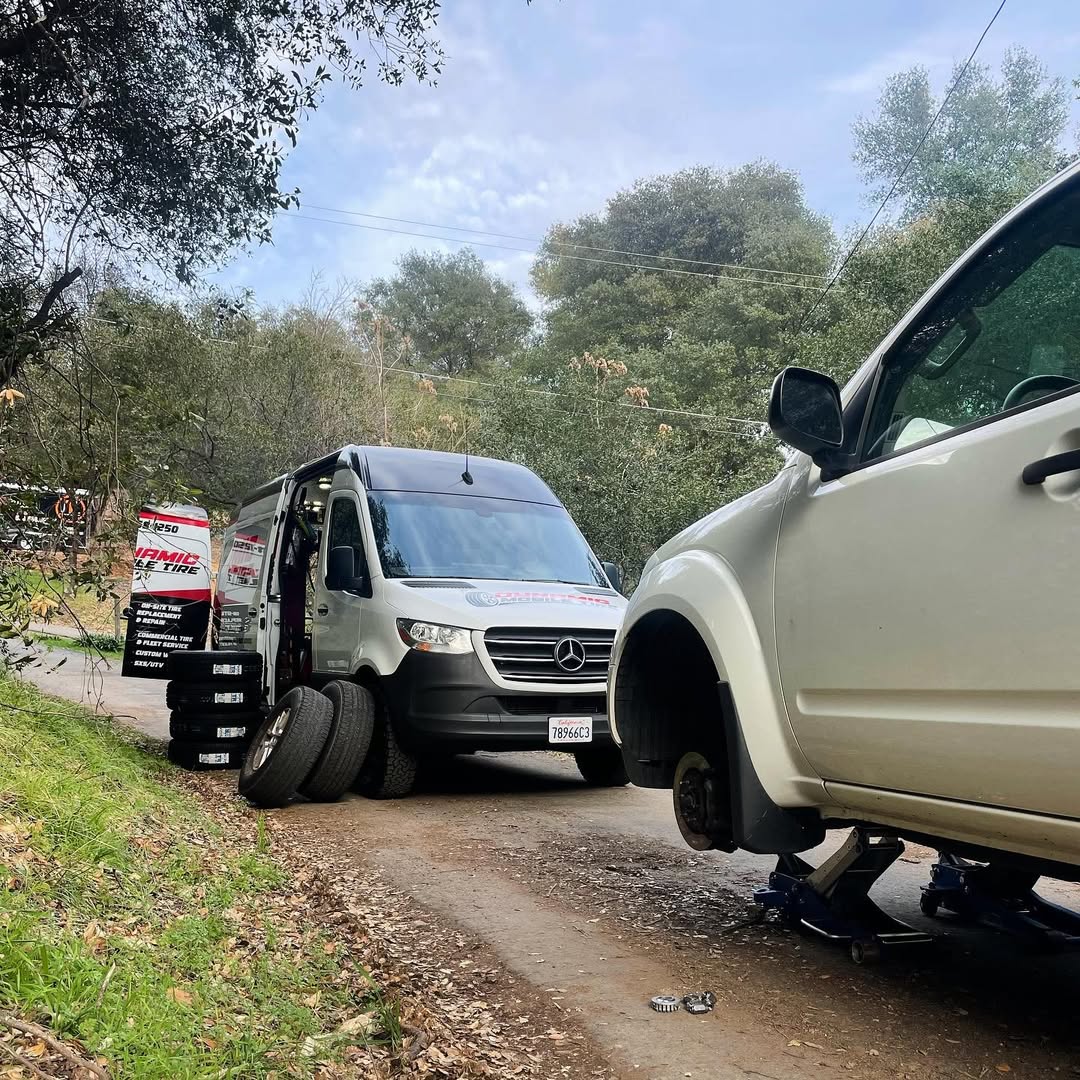
We provide mobile tire service and professional tire replacement at suitable locations, including home, work, or another accessible vehicle location.
Dynamic Mobile Tire serves Sacramento and surrounding areas, helping drivers who need new tires when age-related or structural deterioration makes replacement appropriate.
Final Thoughts
Not every visible crack calls for the same response. What matters is the extent of the deterioration, the tire’s overall condition, and whether its structure may be compromised.
A tire can still have good-looking tread and develop age-related rubber damage. If you notice significant cracking, bulges, deformation, or worsening tire condition, professional evaluation can help determine whether continued use is appropriate.
If your tires show signs of significant deterioration, Dynamic Mobile Tire can help with professional tire replacement and mobile tire service throughout Sacramento and nearby communities.
More than justtire replacement
From flat tire repair to balancing, TPMS diagnostics, and new tire installation, we bring the service to you.
Book a Service