If you have had the same tires for several years, it is normal to wonder whether they still have plenty of life left or whether replacement is getting close. Mileage is useful, but it does not tell the whole story.
Tires do not have one exact lifespan. How long tires last depends on mileage, age, tread depth, driving habits, road conditions, maintenance, and visible wear or damage. Two sets of tires with similar mileage can be in very different condition depending on how and where they have been driven.
Understanding those factors can help you decide when to keep monitoring your tires and when it may be time for replacement.
How Long Do Tires Last?
There is no single mileage or number of years that applies to every tire.
Some tires may last for tens of thousands of miles, while others wear out much sooner. Tire type, vehicle weight, driving style, road conditions, inflation, rotation history, and maintenance all influence how long car tires last.
That is why asking how long should tires last is only the starting point. The more useful question is whether the tires are still in good condition for the way the vehicle is being used.
Is Mileage the Only Thing That Matters?
No. Mileage matters, but tire age, tread depth, wear patterns, road conditions, and maintenance are also important.
Imagine two drivers who have each put the same number of miles on their tires. One regularly checks pressure and keeps up with tire rotation. The other drives on rough roads, skips maintenance, and frequently carries heavy loads.
Even with similar mileage, their tires may not wear at the same rate.
That is why how many miles tires last should never be used as the only replacement rule.
How Many Miles Do Tires Last on Average?
Many tires are designed to provide tens of thousands of miles of use, but actual tread life varies widely.
Driving style matters. Frequent hard braking, aggressive acceleration, heavy loads, rough pavement, and long periods of underinflation can all shorten tire life. Maintenance also plays a role.
The tire itself matters too. Different tire designs and intended uses can wear at different rates, so the expected life of one tire may not match another.
Instead of relying on mileage alone, look at mileage together with age, tread condition, wear patterns, and overall tire health.
Does Tire Age Matter if the Tread Looks Good?
Yes. Tire age can matter even when there appears to be tread left because rubber can dry, crack, or weaken over time.
A vehicle that is driven infrequently may have tires with relatively low mileage but significant age. That means an older tire should not automatically be considered good simply because the tread still looks deep.
Visible cracking, changes in the rubber, repeated pressure loss, or other signs of deterioration deserve attention. If you are unsure about old tires, a professional inspection can help determine whether continued use is appropriate.
What Tread Depth Means You Should Replace Your Tires?
Tires should be replaced when tread depth is too low for safe driving or when wear indicators show that the tire is worn out.
Tread helps the tire maintain contact with the road, especially when pavement is wet. As tread becomes shallower, the tire has less ability to move water away from the contact area.
When considering tire tread depth and when to replace your tires, the important point is not only the exact measurement. The entire tire should be considered, including uneven wear, age, damage, and how much usable tread remains across different parts of the tire.
What Causes Tires to Wear Out Faster?
Several everyday factors can shorten tire life:
- Underinflation or overinflation
- Aggressive driving
- Frequent hard braking
- Rough roads and potholes
- Carrying heavy loads
- Skipping tire rotation
- Wheel imbalance
- Alignment-related issues
- Driving on damaged tires
- Heat and changing weather conditions
A tire does not need to experience a dramatic failure to wear out early. Small maintenance problems repeated over thousands of miles can gradually create tire tread wear or irregular wear patterns.
How Do Tire Rotation and Balancing Affect Tire Life?
Tire rotation and balancing can help support more even tire wear, smoother driving, and better tire performance over time.
Rotating your tires moves them to different positions on the vehicle so the same tires are not always carrying the same type of wear. This can help the full set wear more evenly.
Tire balancing addresses weight differences in the tire and wheel assembly. When balancing is needed, correcting it can help reduce vibration and some types of uneven wear.
Neither service guarantees a specific tire lifespan, but both can be useful parts of routine tire maintenance.
Can Uneven Tire Wear Mean You Need New Tires?
Uneven tire wear is a reason to have the tires inspected.
Sometimes the issue may be caught early enough that maintenance can help prevent the wear from progressing as quickly. In other cases, severe or irregular wear may mean a tire has already reached the point where replacement is more appropriate.
Uneven wear can also point to another issue involving pressure, balancing, rotation, alignment, or vehicle components. Simply replacing the tire without understanding why it wore unevenly may leave the underlying problem unresolved.
When Should Tires Be Replaced?
Tires should be replaced when tread is too low, the tire is too old, there is serious damage, wear is uneven or severe, the tire repeatedly loses air, or it is no longer suitable for normal driving.
Replacement may be appropriate when you notice:
- Very low or heavily worn tread
- Severe or irregular wear
- Cracking or bulging
- Significant tire damage
- Repeated air loss
- Persistent vibration combined with tire wear
- An older tire showing signs of deterioration
Not every puncture or pressure problem means you need a new tire. Some damage may qualify for flat tire repair, while other conditions make replacement the better option.
Can Mobile Tire Installation Help When You Need New Tires?
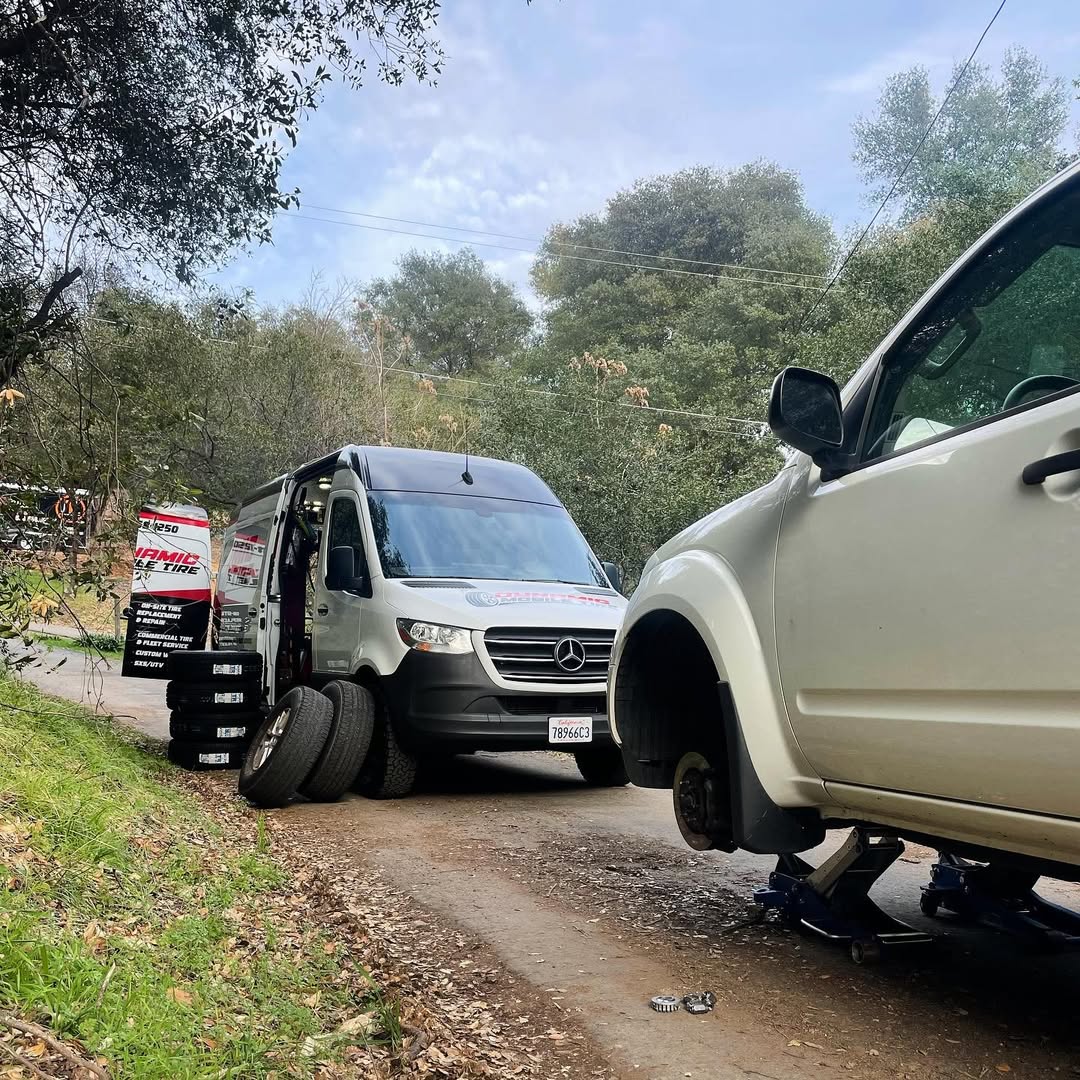
Yes. If your tires have reached the end of their usable life, mobile tire installation can often bring the replacement service to the vehicle.
Depending on the location and service requirements, new tires may be installed at home, work, or another safe vehicle location. This can make tire replacement easier to fit into your schedule without adding an unnecessary shop visit.
Mobile tire service can also help when you are unsure whether a tire needs repair, maintenance, or replacement.
How Dynamic Mobile Tire Helps Sacramento Drivers
Dynamic Mobile Tire provides new tire installation, rotation, balancing, flat tire repair, and tire pressure support for drivers in Sacramento and surrounding areas.
If a tire repeatedly loses pressure or a warning light keeps appearing, TPMS service may also help determine whether the issue involves the tire or the pressure monitoring system.
For work vehicles, regular fleet tire service can help businesses monitor tire condition and plan replacement before worn tires create avoidable interruptions.
Dynamic Mobile Tire serves Sacramento and surrounding areas, including Rancho Cordova, Folsom, Roseville, Citrus Heights, Carmichael, El Dorado Hills, and nearby communities.
Final Thoughts
There is no universal answer to how long tires last. Mileage is important, but so are tire age, tread depth, maintenance history, uneven wear, pressure loss, and visible condition.
If you are not sure whether your tires are still in good condition or ready for replacement, Dynamic Mobile Tire can help. Our team provides mobile tire service, new tire installation, tire rotation, tire balancing, and tire support throughout Sacramento and surrounding areas.
Tire service made easy.
No shop visits. No long waits. Just reliable mobile tire service brought directly to you.