No, it is generally not safe to drive on a tire with a slow leak for an extended period. While a slow leak may not cause immediate tire failure, it progressively reduces tire pressure, compromising vehicle handling, fuel efficiency, and overall safety. Addressing a leaking tire promptly is crucial to prevent further damage and potential accidents.
Driving with insufficient tire pressure, even from a slow leak, puts undue stress on the tire’s sidewalls, generates excessive heat, and reduces the tire’s ability to maintain proper contact with the road. This can lead to a sudden blowout, especially at higher speeds, posing a significant risk to drivers and passengers.
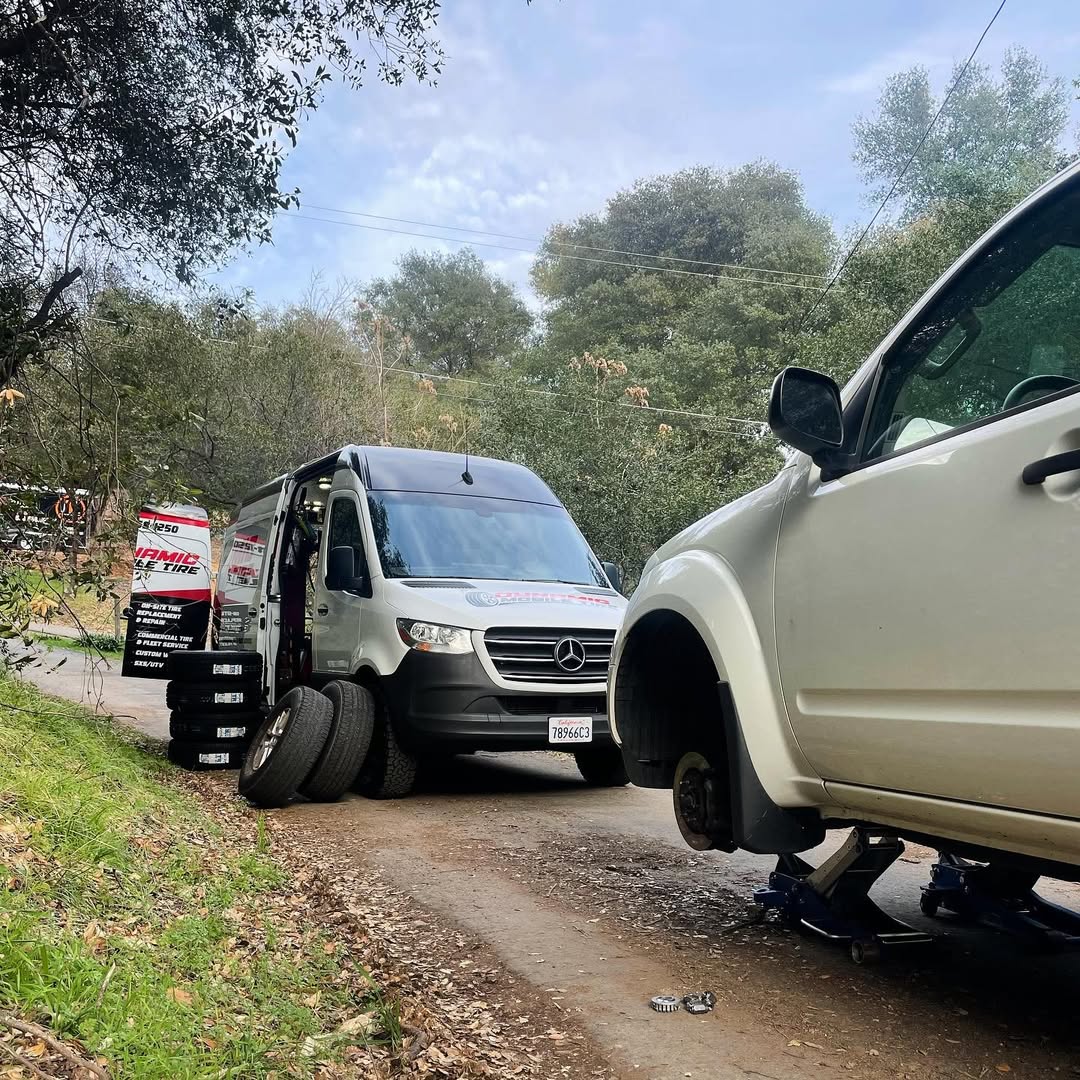
At Dynamic Mobile Tire, our team understands the inconvenience and concern a slow leak can cause. We specialize in mobile tire service and flat tire repair at your home, bringing expert assistance directly to you. This article will explain the dangers of driving with a slow leak, how to identify the problem, and the best solutions to keep you safe on the road.
1. Understanding What a Slow Leak Tire Is
A slow leak tire is a pneumatic tire that gradually loses air pressure over time, rather than experiencing a sudden, complete deflation. This type of leak often goes unnoticed initially, as the pressure drop might be subtle and not immediately visible.
Unlike a sudden flat tire, which is obvious and immobilizing, a slow leak can allow you to continue driving, often leading drivers to question, “can you drive on a slow leak tire?” The air loss can be caused by small punctures from nails or screws, faulty valve stems, corroded wheel rims, or even minor damage to the tire bead.
Identifying a slow leak requires vigilance. Regular tire pressure checks are essential because visual inspection alone may not reveal a minor pressure drop. Ignoring these subtle signs can escalate a minor issue into a major safety hazard.
2. Immediate Risks of Driving on a Leaking Tire
Driving on a leaking tire, even with a slow loss of pressure, presents several immediate safety risks that can compromise your control over the vehicle. As tire pressure drops, the tire’s structural integrity weakens, increasing the risk of an incident.
The most critical immediate risks include:
- Reduced Handling and Stability: Low tire pressure reduces the contact patch with the road, leading to poor steering response, longer braking distances, and increased difficulty in controlling the vehicle, especially during emergency maneuvers.
- Increased Risk of Blowout: Underinflated tires generate excessive heat due to increased friction and flexing of the sidewalls. This heat can weaken the tire’s internal structure, dramatically increasing the likelihood of a sudden and dangerous blowout, particularly at highway speeds.
- Compromised Braking Performance: A tire with a slow leak cannot provide optimal grip, which means your vehicle’s braking system will be less effective. This can significantly increase stopping distances, making collision avoidance much harder.
These risks highlight why it is never advisable to drive on a tire with a slow leak for any significant duration. Your safety and the safety of others on the road depend on properly inflated tires.
3. Long-Term Consequences of Driving with a Slow Leak
Beyond immediate safety concerns, consistently driving with a slow leak in your tire can lead to significant long-term consequences, impacting your vehicle’s performance and your wallet. These issues stem from the uneven wear and increased stress placed on an underinflated tire.
The long-term effects include:
- Premature Tire Wear: Underinflated tires cause the outer edges of the tread to bear more weight and friction, leading to uneven and accelerated wear. This drastically shortens the lifespan of your tires, requiring earlier and more frequent replacements.
- Decreased Fuel Efficiency: A tire with low pressure creates more rolling resistance. Your engine has to work harder to move the vehicle, directly leading to increased fuel consumption and higher operating costs.
- Damage to Wheel Rims: If the tire pressure becomes too low, the tire may not adequately protect the wheel rim from impacts with potholes or road debris. This can result in costly damage to the rims, which may require repair or replacement.
- Suspension System Strain: Driving on underinflated tires can also put extra strain on your vehicle’s suspension components, leading to premature wear and potentially expensive repairs down the line.
Understanding these implications reinforces why addressing a slow leak promptly is not just a safety measure but also a smart financial decision.
4. How to Identify a Slow Leak in Your Tire
Recognizing the signs of a slow leak early can prevent serious problems. While some leaks are hard to spot, a combination of observation and regular checks can help you detect an issue before it escalates. This is key to knowing “can you drive on a leaking tire” with any confidence.
Key indicators that your tire might have a slow leak include:
- Frequent Low Pressure Warnings: If your Tire Pressure Monitoring System (TPMS) light illuminates more often than usual, it’s a strong sign of a persistent air loss.
- Visual Inspection: Regularly check your tires for any visible foreign objects embedded in the tread, such as nails or screws. Also, look for bulges, cracks, or deformities in the sidewall.
- Uneven Wear Patterns: Observe if the edges of your tire treads are wearing down faster than the center, a common sign of underinflation.
- Vehicle Pulling or Vibration: A significantly underinflated tire can cause your vehicle to pull to one side or create unusual vibrations while driving.
- The “Soapy Water Test”: If you suspect a leak but can’t see it, spray a mixture of soap and water on the tire’s tread, sidewalls, and around the valve stem. Bubbles forming indicate escaping air.
Always perform these checks when your tires are cold for the most accurate pressure readings. Early detection allows for timely repair, often saving the tire from irreparable damage.
5. When Is It Safe to Drive Short Distances with a Slow Leak?
The question “can I drive on a tire with a slow leak” for a short distance often arises out of necessity. In rare, non-emergency situations, driving a very short distance at low speed might be permissible to reach a safe place or a service station.
However, this decision should only be made with extreme caution and under specific conditions:
- Minimal Pressure Loss: If the pressure drop is very minor (e.g., only a few PSI below recommended) and you are confident the leak is extremely slow.
- Short Distance Only: Limit driving to the nearest tire service center or a safe parking spot, ideally no more than a few miles.
- Low Speed: Drive well below the speed limit, avoiding highways or speeds above 30-40 mph to minimize heat buildup and stress on the tire.
- Avoid Heavy Loads or Rough Terrain: Any additional strain will exacerbate the risk of further damage or a blowout.
- Constant Monitoring: Be acutely aware of any changes in handling, vibrations, or noise from the tire. If conditions worsen, pull over immediately.
Even under these circumstances, it is always safer to avoid driving and instead call for mobile tire service. Your safety should always be the top priority.
How Dynamic Mobile Tire Can Help with a Leaking Tire
When you discover a slow leak or a flat tire, the most convenient and safest solution is to seek professional help that comes to you. Dynamic Mobile Tire specializes in bringing expert flat tire repair and mobile tire service directly to your location, whether at home, work, or roadside.
Our team is equipped to quickly diagnose the cause of your leaking tire, whether it is a puncture, valve stem issue, or bead leak. We provide efficient, reliable repairs or replacements on site, saving you the hassle and potential danger of driving on a compromised tire. Don’t risk further damage or your safety.
Prioritizing Tire Safety and Performance
Maintaining properly inflated tires is a fundamental aspect of vehicle safety and performance. A slow leak, though seemingly minor, can quickly escalate into a dangerous situation, impacting your vehicle’s handling, increasing the risk of accidents, and leading to costly repairs. Addressing these issues promptly is not just about convenience; it’s about peace of mind.
At Dynamic Mobile Tire, we are committed to providing professional, clear, and convenient mobile tire services. Our goal is to ensure your tires are always in optimal condition, allowing you to drive safely and confidently.
If you suspect you have a slow leak or need any tire assistance, don’t hesitate to reach out. Contact Dynamic Mobile Tire today for expert mobile tire service and flat tire repair at your home, and let us bring the solution directly to you.