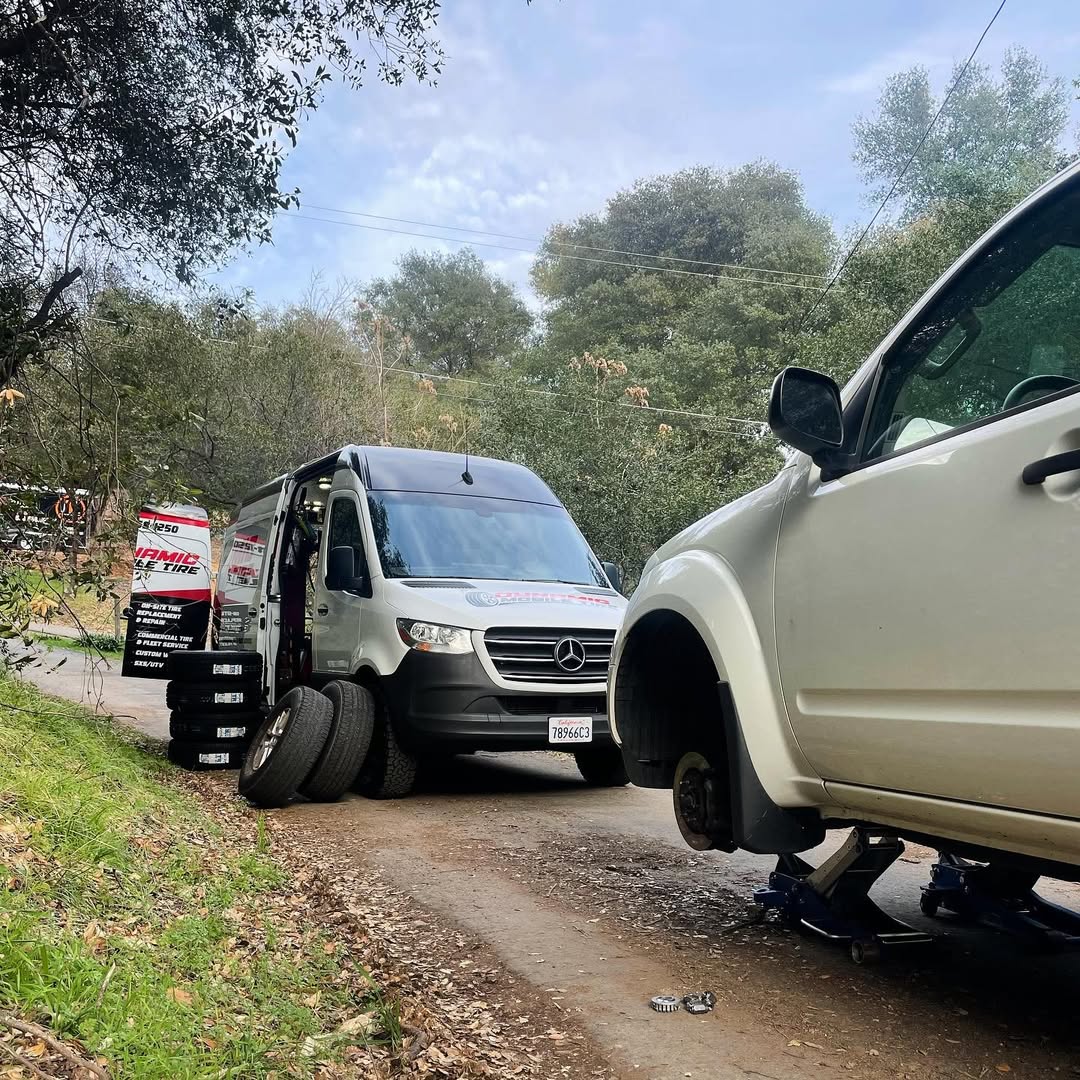
For a business that depends on work vehicles, a tire problem can affect much more than one driver. A flat tire can leave a service van unavailable, while low tire pressure on a delivery vehicle can interrupt a route or delay customer appointments.
That is why fleet downtime matters. The time a vehicle spends unavailable can affect schedules, crews, customers, and overall productivity.
Mobile tire service can help reduce fleet downtime by bringing common tire support directly to the vehicle’s location instead of requiring every vehicle to be driven to a shop. It does not eliminate every interruption, but it can make many tire needs easier to handle during the workday.
Why Fleet Downtime Matters
Fleet downtime happens when a work vehicle is unavailable for normal use, and even one vehicle out of service can affect routes, crews, deliveries, appointments, and productivity.
The actual tire service may take only part of that time. A business may also need to send someone to a shop, wait for service, rearrange assignments, move equipment between vehicles, or delay customer work.
For a small fleet, losing one pickup or work van can have an especially noticeable impact because there may not be another vehicle available to take its place.
How Mobile Tire Service Helps Reduce Downtime
The main advantage of mobile tire service is that the tire technician comes to the vehicle when the location and service allow it.
That can reduce the time spent driving to a shop and waiting for the vehicle to be serviced. A work truck may be handled at the business location, fleet lot, job site, or another suitable place where it is already parked.
This approach can be useful for both planned maintenance and unexpected tire problems. Instead of treating every tire issue as a separate shop visit, businesses have another way to keep tire service closer to normal operations.
Tire Problems That Can Take Work Vehicles Out of Service
Work vehicles are often taken out of service by flat tires, slow leaks, low pressure, worn tread, vibration, or tire damage that makes driving unsafe or impractical.
Common problems may include:
- Flat tires
- Slow air leaks
- Low tire pressure
- TPMS warning lights
- Uneven tire wear
- Vibration or rough ride quality
- Worn tread
- Damaged tires
- Tires due for rotation
- Tires that need replacement
Some problems may be minor when they first appear but become more disruptive when they are ignored. For example, a slow leak that repeatedly lowers tire pressure may eventually leave the vehicle unable to complete its normal route.
Regular fleet tire service can help businesses address those issues more systematically.
Mobile Tire Repair for Unexpected Problems
A mobile tire repair service can help when a tire problem happens during the workday and the vehicle is safely accessible.
A puncture, slow leak, or flat tire may be inspected at the vehicle’s location. If the damage is repairable, mobile tire repair can help return the vehicle to service without automatically sending it elsewhere.
Not every damaged tire can be repaired. Sidewall damage, severe wear, or other structural concerns may mean the tire needs replacement instead. In those cases, mobile service can still help determine the appropriate next step.
Mobile Fleet Tire Maintenance for Planned Support
Mobile fleet tire maintenance focuses on scheduled tire support before a problem interrupts the workday.
Planned maintenance may include tire pressure checks, tread inspections, checking for uneven wear, rotation planning, balancing needs, and reviewing tire pressure warning lights or sensor concerns.
For example, a fleet with several vehicles parked together may be able to schedule routine tire service at one location. That can make maintenance easier to organize than sending each vehicle to a shop separately.
TPMS service can also help when drivers report repeated tire pressure warnings or when a pressure sensor issue may be involved.
Installation, Balancing, and Rotation Without Extra Shop Trips
Fleet maintenance is not only about fixing flats. Work vehicles also need tire replacement and routine maintenance over time.
Mobile tire installation can help when worn or damaged tires need to be replaced. Depending on the scheduled service, tire installation and balancing may also be handled at the vehicle’s location.
Balancing can help address vibration and support smoother tire performance, while mobile tire rotation can help tires wear more evenly across the vehicle.
Handling these services where vehicles are already parked can reduce unnecessary scheduling interruptions for routine tire maintenance.
Why This Works Well for Work Trucks, Vans, and Small Fleets
Pickups, service vans, delivery vehicles, and other work vehicles often have tightly planned days. One vehicle may carry tools, equipment, products, or employees that cannot simply be transferred to another vehicle at the last minute.
A mobile fleet tire service can be particularly useful for contractors, property maintenance companies, delivery businesses, and service companies with appointments throughout the day.
The goal is not to eliminate every minute of vehicle downtime. It is to avoid adding unnecessary travel and waiting time when the tire service can reasonably be performed where the vehicle already is.
When Should a Fleet Schedule Mobile Tire Service?
Businesses do not have to wait for a complete tire failure before arranging service.
Consider scheduling mobile support when:
- One or more vehicles repeatedly lose air
- A vehicle develops a flat or slow leak
- A TPMS warning light stays on
- Several vehicles need tire inspections
- Tires are due for rotation
- A vehicle needs new tires
- Drivers report vibration or rough ride quality
- Multiple vehicles are parked together and need maintenance
- Routine shop trips are creating avoidable scheduling problems
These situations can be handled as part of a broader mobile fleet tire maintenance plan rather than waiting for each tire issue to become urgent.
When a Shop May Still Be Needed
A shop may still be needed if the vehicle cannot be safely accessed, the tire issue cannot be handled on-site, or the vehicle needs repairs beyond tire service.
Mobile tire service is useful for many routine and unexpected tire needs, but it does not replace every type of shop visit. Some vehicle problems require additional equipment, mechanical repairs, or a controlled service environment.
The best option depends on the tire condition, vehicle, location, and type of work required.
Mobile Tire Service for Sacramento Businesses
Sacramento businesses often manage local service routes, delivery schedules, customer appointments, job sites, and vehicles moving between different parts of the region.
A Sacramento mobile tire service can bring support directly to the vehicle when possible, helping businesses avoid sending a driver across town simply for routine tire work.
Dynamic Mobile Tire serves Sacramento and surrounding areas, including Rancho Cordova, Folsom, Roseville, Citrus Heights, Carmichael, El Dorado Hills, and nearby communities.
Final Thoughts
Mobile tire service can help reduce fleet downtime by bringing tire support closer to where work vehicles are already located. It can support unexpected problems, planned maintenance, and routine tire needs without automatically adding another shop trip to the schedule.
If tire issues are slowing down your work vehicles, Dynamic Mobile Tire can help bring service to your location. Our team supports Sacramento businesses with mobile tire service, fleet tire service, tire repair, installation, balancing, rotation, and TPMS-related support.
Skip the tire shop.We bring it to you.
Home, work, roadside, or job site. Dynamic Mobile Tire makes tire service easier, faster, and more convenient.
Book Mobile Service